
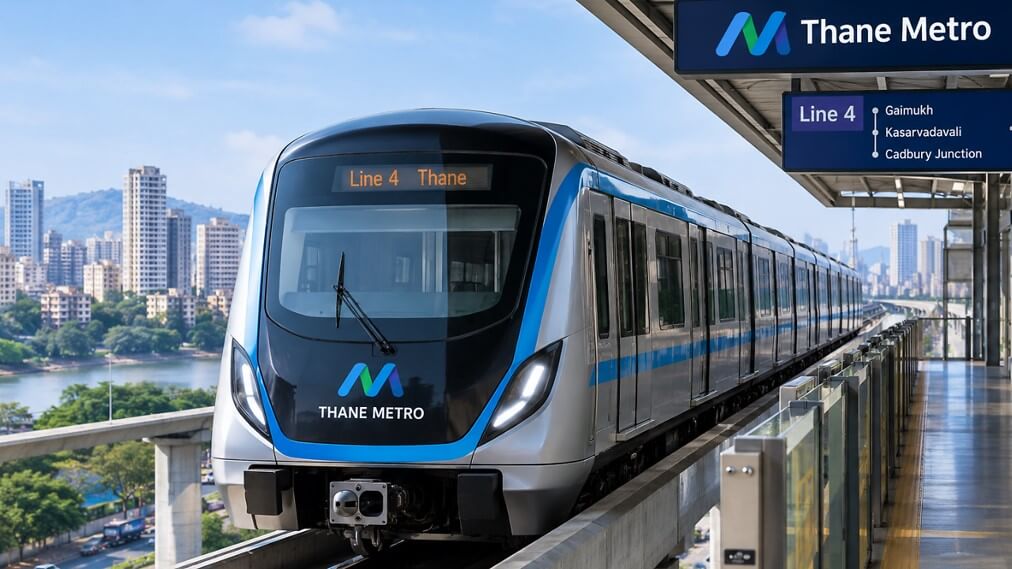
Thane Metro Line 4 is moving closer to becoming operational, with the first phase connecting Gaimukh to Cadbury Junction via Kasarvadavali likely to be inaugurated in December 2026, Maharashtra Transport Minister Pratap Sarnaik has said.
The proposed launch is expected to provide relief to commuters travelling along the congested Ghodbunder Road corridor by offering an additional public transport option and reducing dependence on road-based transport.
Metro Line 4 and its extension, Line 4A, together span 35.20 km and are planned to have 32 stations. Once operational, the network is expected to strengthen connectivity between Mumbai, Thane and the eastern and western suburbs, improving access to residential, commercial and economic centres.
According to Sarnaik, the commencement of services on the Gaimukh–Kasarvadavali–Cadbury Junction stretch is expected to reduce travel time, ease traffic congestion and improve daily commuting for Thane residents. The shift towards Metro transport could also help lower fuel consumption and vehicular emissions.
Alongside transport infrastructure, the state government is promoting Thane’s tourism potential. An allocation of approximately Rs 250 crore has been made for developing Gaimukh Chowpatty and the Kanhoji Angre Memorial, Sarnaik said.
The Nangal Bandar Chowpatty area is also being developed as a tourism destination. These initiatives aim to improve recreational amenities, attract visitors and generate opportunities for local businesses and employment.
The projects are being undertaken with the support of Deputy Chief Minister and Mumbai Metropolitan Region Development Authority (MMRDA) Chairman Eknath Shinde.
Sarnaik said the government is pursuing an integrated development approach that combines improved public transport, tourism infrastructure and public amenities. The initiatives are expected to contribute to Thane’s urban development over the next two years.
The proposed Metro launch and tourism projects form part of a broader infrastructure development push aimed at improving connectivity, easing pressure on roads and enhancing the quality of life for residents. The actual impact on congestion will depend on the operational rollout of the Metro service and the extent to which commuters shift from road transport.